
Resources
What to Do After Flood Damage in Tampa Bay: 10 Safe First Steps
If floodwater reaches your Tampa Bay home, safety comes first. Use this practical checklist to document damage, avoid electrical hazards, and begin cleanup responsibly.
Educational information: This article is not a property assessment, engineering or environmental opinion, dispatch promise, insurance determination, or authorization for work.
When floodwater reaches a Tampa Bay home, the pressure to act fast can make an already stressful situation feel chaotic. The safest response is not to rush into the building or begin tearing out materials. Start by protecting people, documenting what happened, and making sure electrical, structural, and contamination hazards are addressed before cleanup begins.
Quick answer: Follow official reentry instructions, stay out of standing water, photograph the damage before moving items, report the loss promptly, save receipts, and begin cleanup only when the affected area can be entered safely. The ten steps below explain that order in practical detail.
If there is an immediate threat to life, a suspected gas leak, fire, structural movement, or contact between water and energized equipment, leave the area and contact the appropriate emergency service or utility provider.
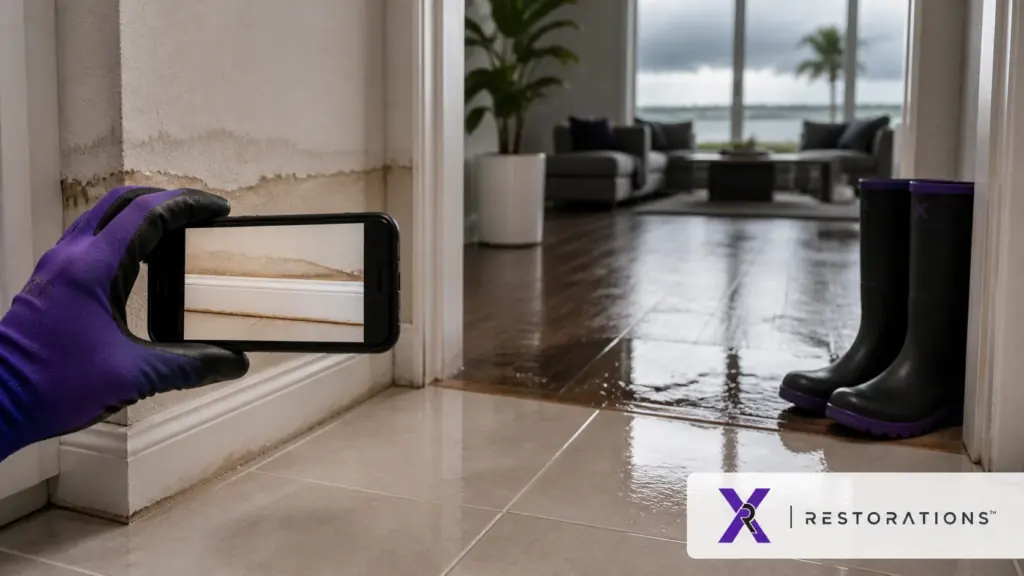
Featured image disclosure: AI-generated educational illustration — not a customer property or job photo.
10 safe first steps after flood damage
1. Wait for official reentry instructions
If you evacuated because of a hurricane, storm surge, river flooding, or a local emergency order, do not return simply because the rain has stopped. Roads, bridges, utilities, and nearby structures may still be unsafe. Follow instructions from local emergency management, law enforcement, and utility providers. The National Weather Service Tampa Bay office publishes separate guidance for inland flooding and coastal flooding, because the hazards and impacts can differ.
2. Check for obvious hazards before entering
From a safe location, look for a shifted roofline, leaning walls, cracked foundations, collapsed ceilings, downed power lines, the smell of gas, or moving water around the building. Do not enter if the structure appears unstable or if authorities have restricted access. Use a battery-powered flashlight rather than a flame, candle, or fuel-burning light source.
3. Never enter standing water to reach electrical controls
Water and electricity can create a lethal combination. Do not walk through water to reach a breaker panel, unplug equipment, or operate a switch. The CDC advises against touching electrical equipment or controls while standing in water. If the electrical system was affected, have the utility provider or a qualified electrician determine when power can be safely disconnected, inspected, and restored.
4. Treat outdoor floodwater as potentially contaminated
Floodwater from streets, canals, storm surge, and overflowing drainage systems can carry sewage, chemicals, sharp objects, and other hazards that are not visible. Keep children and pets away. Avoid direct contact whenever possible. If an appropriate authority or qualified professional determines that limited entry is safe and contact cannot be avoided, use protective boots, gloves, eye protection, and clothing suited to the conditions. Clean exposed skin promptly and protect open cuts. See the CDC’s floodwater safety guidance for additional precautions.
5. Photograph and video the damage before moving anything
Once the property can be entered safely, create a visual record before cleanup changes the scene. Begin with wide views of every affected room, then capture close-ups of water lines, wet flooring, walls, cabinets, furniture, and personal property. Photograph the exterior from several angles. Include appliance model and serial numbers when they are safely accessible. A slow video walkthrough can show how rooms connect and where water traveled.
6. Record the basic facts and start an inventory
Write down the date and approximate time the water was first noticed, the likely source if known, and any steps already taken. Do not guess if the source is uncertain. List damaged items by room and include the brand, model, approximate age, and original cost when available. Back up photos and notes to cloud storage or email so the record is not lost with the phone or computer.
7. Notify the insurer promptly and preserve receipts
Report the loss using the contact method shown on your policy or insurer’s website. Ask what documentation is required and whether the insurer wants to inspect items before disposal. Coverage decisions depend on the policy, cause of loss, and insurer; a restoration provider cannot determine coverage. Save claim numbers, names, dates, emails, temporary lodging records, supply purchases, and invoices. Florida’s Department of Financial Services recommends prompt reporting, photo or video documentation, and retaining receipts in its storm recovery guidance.
8. Make only safe, documented temporary measures
If it can be done without entering an unsafe area, take reasonable steps to prevent additional water from entering—for example, placing a temporary cover over an accessible opening or moving undamaged belongings away from a dry, safe edge of the affected area. Photograph conditions before and after the temporary measure. Avoid broad demolition, irreversible repairs, or operating unfamiliar equipment until the hazards, water source, and documentation requirements are understood.
9. Do not use an affected HVAC system as a drying tool
If floodwater reached air handlers, ductwork, returns, or other HVAC components, leave the system off until a qualified HVAC professional evaluates it. Running an affected system can move contaminants or moisture through the building. HVAC inspection and repair are separate from restoration drying and should be performed by the appropriate trade professional.
10. Begin a planned cleanup and drying process
After immediate hazards are controlled and the loss is documented, cleanup can proceed in a deliberate order: remove standing water when safe, separate affected contents, clean or remove materials according to their condition and exposure, establish controlled drying, and verify progress with measurements. Visible surfaces may look dry while moisture remains beneath flooring, inside wall cavities, or behind cabinets. Learn more in What Structural Drying Means After an Indoor Water Intrusion and Why Moisture Monitoring Matters During Water Mitigation.
Protect the people doing the cleanup as carefully as the building. The EPA recommends appropriate gloves, eye protection, protective clothing, and respiratory protection for flood cleanup. Never mix bleach with ammonia or other cleaners. If temporary power is needed, operate a fuel-powered generator outdoors at least 20 feet from doors, windows, and vents—not in a house, garage, carport, or other enclosed space.
The source of the water changes the cleanup approach
A supply-line break, roof leak, storm surge, street flooding, and sewage backup are not interchangeable events. The source, time elapsed, materials affected, and conditions inside the building all influence what can be safely cleaned and dried. Outdoor floodwater should not be treated like a small, freshly released plumbing leak. At the same time, it is not responsible to assign a water category or prescribe demolition remotely without inspecting the property.
If the water source is unknown, describe what you can observe—where the water entered, its color or odor, and which rooms are affected—without touching or sampling it. A qualified assessment can then determine appropriate containment, personal protection, cleaning, removal, and drying steps.
A practical flood-damage documentation checklist
- Exterior views of every side of the building
- Wide and close-up photos of each affected room
- Visible water lines and the apparent entry point
- Floors, baseboards, walls, ceilings, cabinets, and closets
- Furniture, electronics, appliances, and personal property
- Model and serial numbers when safely accessible
- A room-by-room item inventory
- The date and approximate time the damage was discovered
- Claim communications, estimates, invoices, and receipts
- Photos of any item that must be discarded for immediate health or safety reasons
FEMA’s damage-documentation guidance also recommends capturing both interior and exterior conditions before disposal and recording appliance serial numbers. When an insurer requests a material sample and it can be retained safely, label it with the room and location.
What can be cleaned, dried, or discarded?
There is no responsible one-line answer. Nonabsorbent items may often be easier to clean than porous materials, but the decision depends on contamination, physical damage, how long the material stayed wet, and whether it can be fully accessed, cleaned, and dried. Highly absorbent materials that cannot be effectively cleaned and dried may need to be removed. The EPA’s flooded-homes resources provide material-specific cleanup information.
Do not discard everything automatically. First document the item, consider immediate safety, and ask the insurer about inspection or retention requirements. Food, medicine, cosmetics, and items that contacted floodwater require special caution; use guidance from public-health authorities for those categories.
Why a room can look dry while moisture remains
Water follows seams, fastener holes, framing, flooring layers, and gravity. It may move behind baseboards, beneath finished floors, into wall insulation, or under built-in cabinetry. Air movement alone does not prove that every affected layer is dry. A documented drying plan uses repeatable moisture measurements and compares affected materials with appropriate dry reference areas. That record helps show whether conditions are improving and where the plan may need adjustment.
When qualified help is appropriate
Professional evaluation is especially important when standing water is near electrical systems, outdoor floodwater or sewage may be involved, HVAC components were affected, water reached multiple rooms or building levels, or wet materials extend into walls, floors, ceilings, insulation, and cabinetry. Extra caution is also appropriate when occupants include young children, older adults, or people with respiratory or immune-system concerns.
A restoration assessment should document visible conditions, map affected areas, identify immediate limitations, and explain proposed mitigation and drying steps. Electrical, plumbing, roofing, structural, and HVAC work should be referred to the properly qualified trade when those systems are involved.
Frequently asked questions
Can I turn off the electricity if water is standing inside?
Not if reaching the panel requires entering water or touching wet equipment. Leave the area and contact the utility provider or a qualified electrician. Never operate electrical controls while standing in water.
Should I start fans immediately?
Only after electrical safety, structural conditions, and the water source have been evaluated. Fans can spread contamination when the water source is unsanitary, and an affected HVAC system should not be used for drying until it has been professionally assessed.
Must everything that got wet be discarded?
No. The correct decision depends on the material, contamination, physical damage, time wet, and whether the item can be safely cleaned and dried. Document items before disposal and ask the insurer about retention requirements.
When should I contact my insurer?
As soon as reasonably possible after immediate safety needs are addressed. Record the claim number and ask what photos, inventories, estimates, or damaged materials the insurer needs. Only the insurer can determine whether a loss is covered under a particular policy.
Is storm-surge water different from a plumbing leak?
Yes. Storm surge and outdoor floodwater can carry sewage, chemicals, debris, and microorganisms. A small plumbing release may present different conditions, although time and contact with building materials can still change the situation. The cleanup plan should be based on the actual source and observed property conditions.
Talk with X Restorations about the conditions at your property
Request a restoration conversation about the conditions you can see at your property. X Restorations is a mobile service provider, and service availability is reviewed property by property. A conversation does not guarantee dispatch, project acceptance, or insurance coverage.
Call (813) 351-9419, email info@xrestorations.com, or use the contact form. For information about current service availability, visit the service availability page. X Restorations does not perform electrical or HVAC repairs and does not determine insurance coverage.
Official safety and recovery resources
- CDC: Reentering Your Flooded Home
- CDC: Floodwater Safety After a Disaster
- EPA: Flood Cleanup and Indoor Air Safety
- EPA: Flooded Homes Cleanup Resources
- Florida Department of Financial Services: Storm Recovery
- Ready.gov: Floods
This article is general educational information, not emergency, medical, legal, electrical, engineering, insurance, or property-specific advice. Conditions vary. Follow instructions from emergency authorities, utilities, qualified trades, public-health agencies, and your insurer.